
What can the strength of your hand tell you about your brain?
Potentially more than you might expect.
Grip strength is a simple measurement of functional muscle strength, but research has increasingly connected it with a much bigger picture of overall health and healthy aging. In addition to providing insight into muscle function, physical resilience, and independence, studies have found an association between lower grip strength and an increased future risk of cognitive decline and dementia.
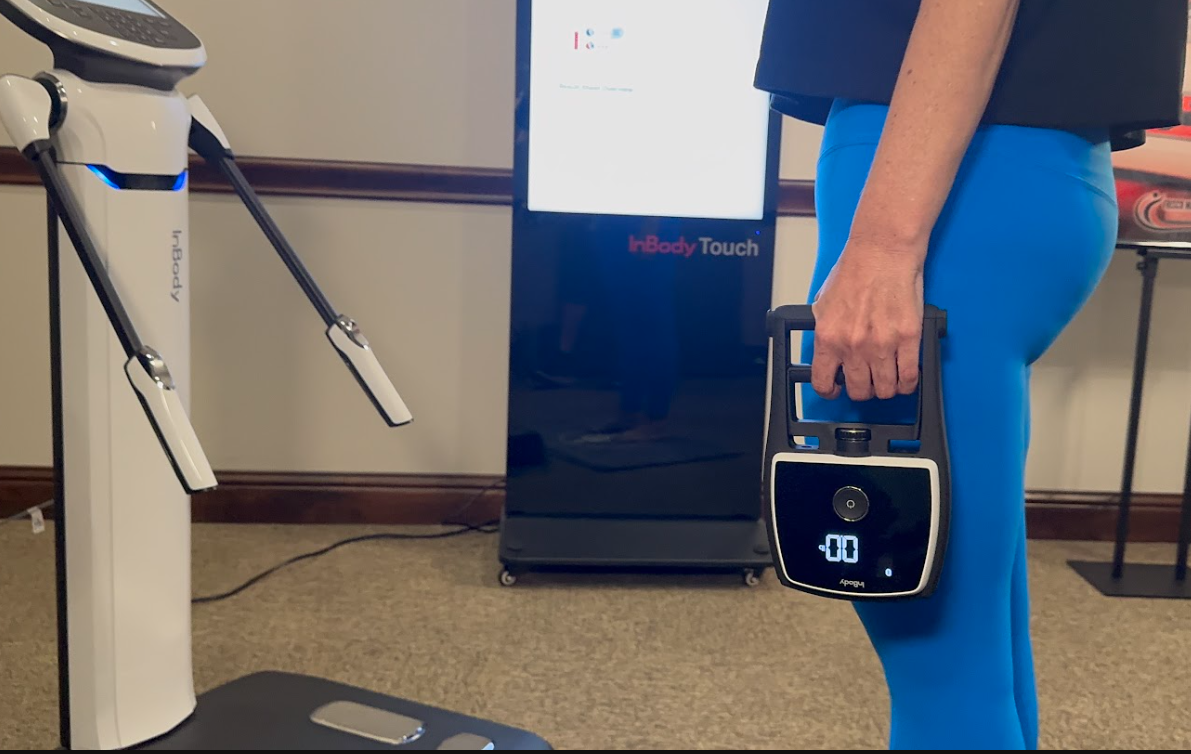
That is one reason grip strength testing is included as part of our InBody 580 Body Composition Assessment at Frisco Massage Therapy.
It gives us another piece of information that goes beyond what you can learn from your weight alone.
Why Measure Grip Strength?
Grip strength measures how much force you can generate when squeezing a specialized device called a hand dynamometer.
Although the test focuses on the hand, the result can serve as a practical indicator of overall muscle strength and function.
Grip strength can provide useful information related to:
- Overall muscle strength and function
- Changes in strength over time
- Risk for age-related muscle loss, or sarcopenia
- Functional ability and independence
- Physical resilience
- Fall risk
- Healthy aging
But researchers have also been studying another important connection: the relationship between grip strength and cognitive health.
What Does Grip Strength Have to Do With the Brain?
Our muscles and brain do not function independently of one another.
Producing a strong grip requires your nervous system and muscles to work together. Researchers have therefore investigated whether changes in physical strength may also provide information about broader changes occurring as we age.
Long-term studies have found that people with lower grip strength tend to have a higher future risk of cognitive decline and dementia.
A systematic review and meta-analysis of longitudinal studies published in Frontiers in Aging Neuroscience, for example, found that poorer grip strength was associated with increased risk of both cognitive decline and dementia.
Other large studies have reached similar conclusions.
Research involving more than 14,000 Americans age 50 and older found relationships between grip strength and future cognitive function. Large UK Biobank studies have also found associations between lower grip strength and dementia risk as well as measures of memory, cognition, and brain health.
This growing body of research is why grip strength is increasingly interesting as a simple physical marker that may provide insight into healthy aging.
An Important Distinction: Grip Strength Is Not a Dementia Test
This point is critical.
Low grip strength does not mean that you have dementia, Alzheimer’s disease, or cognitive impairment.
Grip-strength testing is not a diagnostic test for any of these conditions, and research showing an association does not prove that weak grip strength causes cognitive decline.
Instead, grip strength can be thought of as one potential risk indicator within a much larger health picture.
Many factors influence both physical and cognitive health, including age, genetics, physical activity, cardiovascular health, nutrition, medical conditions, and lifestyle.
A grip-strength measurement simply gives you another objective data point to follow.
Muscle Mass and Muscle Strength Aren’t the Same Thing
This is where combining grip-strength testing with body composition analysis becomes particularly useful.
Two people can have similar amounts of skeletal muscle but very different levels of functional strength.
An InBody 580 assessment can help show how much muscle you have and how that lean mass is distributed throughout your body. Grip-strength testing adds another perspective by helping assess how effectively your muscles can produce force.
Together, these measurements provide a more complete picture than body weight alone.
For example, tracking body composition and grip strength over time may help you identify whether you are:
- Maintaining skeletal muscle as you lose weight
- Improving functional strength
- Experiencing age-related changes in muscle
- Maintaining strength during a fitness or wellness program
- Making progress that isn’t visible on a traditional scale
Why This Matters as We Age
Maintaining muscle isn’t just about appearance or athletic performance.
Muscle strength plays an important role in our ability to lift, carry, climb stairs, maintain balance, remain active, and continue performing everyday activities independently.
And the research connecting physical strength with cognitive health gives us another reason to pay attention to changes over time.
The goal isn’t to look at one grip-strength score and draw conclusions about your future health. The value comes from establishing objective measurements and monitoring how your body changes.
If your strength is declining, that information can create an opportunity to have a conversation with the appropriate healthcare or fitness professional about physical activity, resistance training, nutrition, or other aspects of your health.
See More Than a Number on the Scale
Traditional scales tell you how much you weigh. They don’t tell you how much of that weight is muscle, how that muscle is distributed, or how your strength is changing.
The InBody 580 Body Composition Assessment at Frisco Massage Therapy provides a much more detailed look at your body, with measurements designed to help you better understand and track your progress.
Combined with grip-strength testing, it provides another way to look at muscle health, functional strength, and healthy aging.
Your grip is a small measurement that may be part of a much bigger health story.
Schedule your InBody 580 Body Composition Assessment at Frisco Massage Therapy and start tracking the numbers that a traditional scale can’t show you.
Grip-strength testing and InBody body composition analysis are not diagnostic tests for cognitive impairment, Alzheimer’s disease, dementia, or other medical conditions. Results should be considered alongside your overall health and discussed with an appropriate healthcare professional when concerns are present.
Research
Research discussed in this article includes longitudinal studies and systematic reviews examining associations between handgrip strength, cognitive function, cognitive decline, and dementia. These studies demonstrate associations and should not be interpreted as evidence that grip strength alone predicts or causes cognitive impairment.