
Jaw clenching and teeth grinding can be easy to think of as problems that only affect the jaw. In reality, the muscular workload can extend into the face, temples, head, neck, and shoulders.
You may wake up with a sore jaw or headache. You might notice facial pressure after a stressful day. Or you may catch yourself sitting at your computer with your teeth pressed together without realizing how long you have been doing it.
Sometimes the first sign of a jaw problem is not actually jaw pain.
Clenching and Grinding Are Not the Same Thing
Jaw clenching generally involves sustained contraction of the muscles that close the jaw, often with the teeth held firmly together.
Teeth grinding, also called bruxism, involves repetitive movement or grinding of the teeth.
Both can occur while you are awake or during sleep.
Awake clenching may happen during concentration, stress, driving, computer work, exercise, or other activities where the body begins to brace without much conscious awareness.
Sleep related grinding happens outside conscious control and can have contributing factors that should be evaluated by an appropriate dental or medical provider when symptoms are persistent.
For massage therapy, the distinction matters. TMJ focused massage does not treat the underlying cause of bruxism or prevent someone from grinding their teeth. What it can address is the muscular tension, overuse, and movement restriction that may accompany those patterns.
Your Jaw Does Not Work in Isolation
Moving the jaw requires coordination between several muscles throughout the face and head.
The masseter along the side of the jaw and the temporalis across the temple are two of the most familiar. Deeper muscles also contribute to opening, closing, and controlling movement of the jaw.
But the muscular pattern often extends beyond those structures.
Jaw clenching may occur alongside tension or guarding through the:
- Cheeks and jaw
- Temples
- Base of the skull
- Neck
- Upper shoulders
Head and neck position, prolonged computer work, repetitive habits, stress related bracing, and how frequently the jaw muscles are being recruited can all influence the overall pattern.
That is why someone may first notice headaches, neck tightness, or facial discomfort before realizing how much they have also been clenching their jaw.
Signs You May Be Clenching More Than You Realize
Jaw clenching does not always cause sharp or obvious pain.
Some people notice:
- Jaw fatigue or soreness
- Tenderness through the cheeks
- Tightness or pressure through the temples
- Headaches
- Difficulty opening the mouth comfortably
- Discomfort after prolonged chewing
- Neck or upper shoulder tension
- Facial or jaw soreness upon waking
- Repeatedly catching themselves pressing their teeth together during the day
Symptoms may also fluctuate depending on stress, workload, sleep, exercise, or periods of intense concentration.
None of these symptoms automatically means clenching or grinding is the cause. Headaches, neck discomfort, facial pain, and jaw symptoms can have many potential sources. The important point is that jaw activity may be one component of a broader muscular pattern.
What TMJ Therapy Addresses
At Frisco Massage Therapy Recovery & Mobility, TMJ Therapy looks beyond the single area that feels tight.
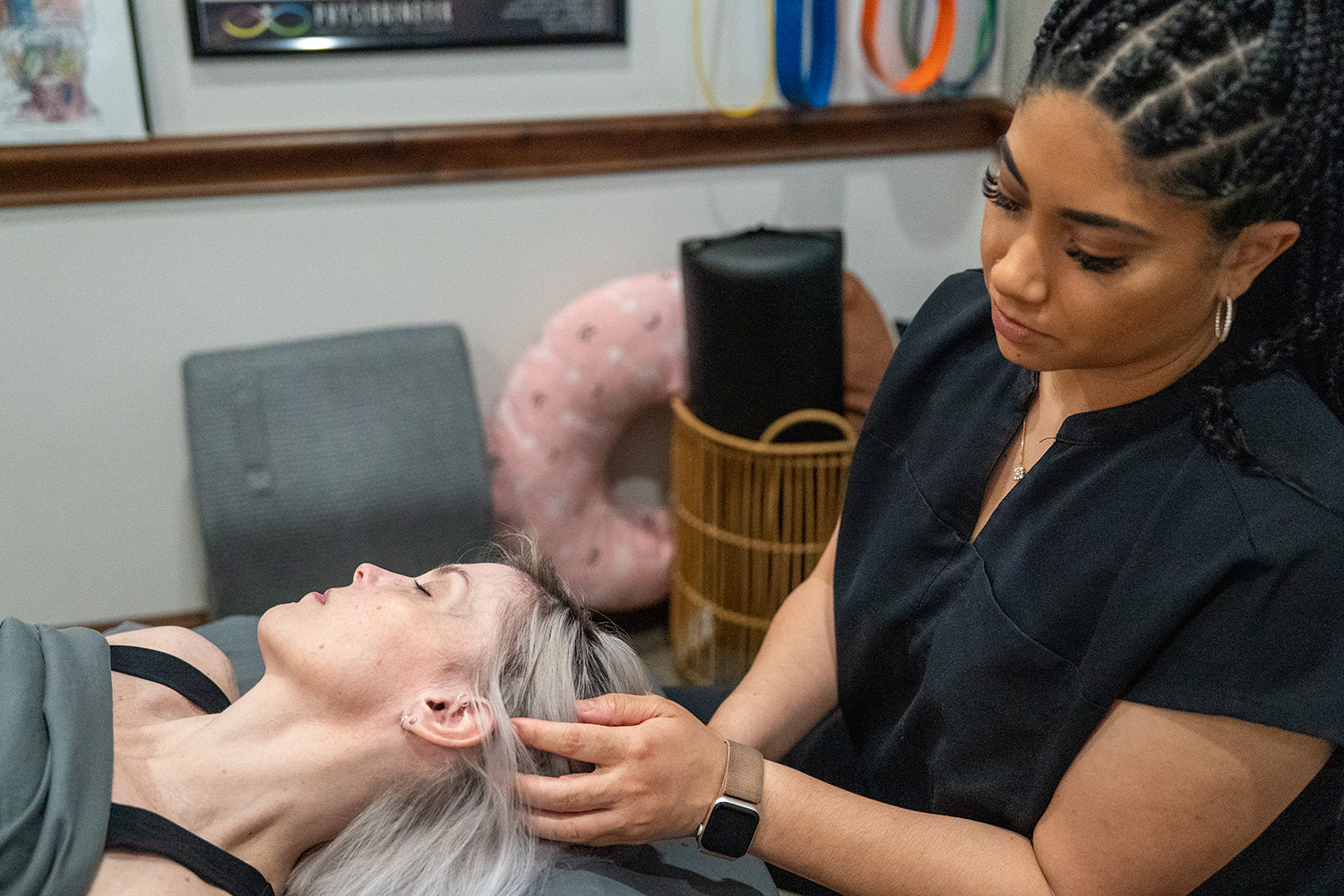
Your therapist may assess and work with structures throughout the jaw, face, head, neck, and shoulders to better understand where muscular tension or movement restriction may be occurring.
Treatment may include work with muscles directly involved in jaw movement as well as surrounding areas that appear to be contributing to the overall pattern.
The objective is not simply to apply more pressure to the jaw.
It is to understand which structures appear to be overworking, which areas feel restricted, and how the jaw is interacting with the surrounding head and neck musculature.
For clients dealing with muscular tension associated with clenching or grinding, this approach can help reduce that tension and support more comfortable movement of the jaw and surrounding areas.
TMJ Therapy May Include Intraoral Muscle Release
One important part of our TMJ Therapy approach is that treatment is not limited to external massage.
When appropriate, a session may include intraoral muscle release, which means targeted muscle work performed inside the mouth.
Some of the deeper muscles involved in jaw movement are more directly accessible through an intraoral approach than through external treatment alone.
This allows the therapist to work with both external and deeper muscular structures as part of the same TMJ focused session.
Intraoral work is not automatically performed during every appointment. Treatment is individualized based on what the therapist finds, what the client is experiencing, and what is appropriate for that particular session.
For some clients, external work through the jaw, face, head, neck, and shoulders may be the primary focus. For others, incorporating intraoral techniques may allow for a more comprehensive approach to the muscular pattern involved.
Why Your Neck and Shoulders May Be Part of the Conversation
Jaw tension rarely exists in a completely separate system from the rest of the upper body.
If you spend hours at a desk, frequently hold your head forward, brace your shoulders during stress, or repeatedly tense your upper body while concentrating, the muscles around the jaw may be working within a larger pattern of tension.
That does not mean posture is automatically responsible for jaw symptoms. It does mean that focusing exclusively on the spot that hurts may overlook other structures participating in the problem.
This is one reason TMJ Therapy at Frisco Massage Therapy Recovery & Mobility may include work through the neck, shoulders, base of the skull, temples, and facial muscles in addition to direct jaw work.
The session is built around what your therapist finds rather than assuming every client needs the same sequence of techniques.
What Massage Therapy Cannot Do
There are important limits to what massage therapy can address.
Massage does not diagnose or cure bruxism. It does not repair dental damage, change the way your teeth fit together, or identify every possible reason someone may clench or grind.
Persistent grinding can contribute to tooth wear and other dental concerns. Sleep related grinding or ongoing jaw symptoms may also warrant evaluation by a dentist, physician, or other appropriate healthcare provider.
Seek appropriate medical or dental evaluation if you are experiencing symptoms such as:
- Significant or worsening jaw pain
- Jaw locking
- Changes in your bite
- Damaged or worn teeth
- Unexplained persistent headaches
- Other symptoms that concern you
Massage therapy can be one part of a broader approach when muscular tension and movement restriction are involved, but it should not replace appropriate dental or medical care.
Start by Noticing What Your Jaw Is Doing
One useful first step is simply becoming more aware of your jaw during the day.
When you are not chewing or swallowing, your teeth generally do not need to remain pressed firmly together.
Periodically check in with yourself:
- Are your teeth touching?
- Are you gripping your jaw while working?
- Are your shoulders raised?
- Are you bracing your neck?
- Are you holding your breath while concentrating?
You may be surprised by how often the jaw is working when it does not actually need to be.
Recognizing that pattern does not solve every cause of clenching, but it can help you identify when unnecessary muscular effort is occurring during your day.
The Jaw May Be the Symptom You Notice, Not the Whole Pattern
Jaw clenching and grinding can involve a surprisingly broad muscular workload.
If your jaw feels tired, your temples frequently feel tight, or your neck and shoulders seem to participate in the same pattern, it may be useful to look beyond the single area that hurts.
At Frisco Massage Therapy Recovery & Mobility, TMJ Therapy is designed to address the muscular and movement patterns associated with jaw tension while considering the face, head, neck, and shoulders as part of the larger picture.
When appropriate, treatment may include both external techniques and intraoral muscle release to provide a more comprehensive approach to the muscles involved in jaw movement.
Book TMJ Therapy
If jaw clenching, grinding, facial tension, or related head and neck discomfort sounds familiar, you can schedule a TMJ Therapy session with our team.