
That first step out of bed can be surprisingly uncomfortable.
For many people dealing with plantar fasciitis, heel pain is often most noticeable during the first few steps in the morning, after sitting for a while, or after spending a long day on their feet. The pain may ease once you start moving—only to return later.
It is easy to think of plantar fasciitis as simply a problem with the bottom of the foot. But the plantar fascia is part of a much larger system responsible for absorbing load, supporting the arch and helping you move through each step.
That means the heel may be where you feel the problem, but it may not be the only area worth paying attention to.
What Is Plantar Fasciitis?
The plantar fascia is a strong band of connective tissue that runs along the bottom of the foot from the heel toward the toes. It helps support the arch and manages some of the forces created when you stand, walk, run and push off the ground.
Plantar fasciitis develops when this tissue becomes irritated from repeated or excessive loading.
A common pattern includes:
- Pain near the bottom or inside of the heel
- Pain with the first few steps after getting out of bed
- Discomfort after sitting or resting
- Increased symptoms after prolonged standing or walking
- Pain that may be more noticeable after activity rather than during it
These are common features, but heel pain has several possible causes. A proper diagnosis matters, particularly when symptoms are persistent, severe or unusual.
Why Does It Happen?
There is rarely one single explanation.
Plantar fasciitis can develop when the amount of stress being placed on the foot exceeds what the tissue is currently prepared to tolerate.
That may happen after:
- Increasing walking, running or exercise volume
- Spending substantially more time standing
- Changing footwear
- Training on different surfaces
- Repetitive high-impact activity
- Changes in how the foot and ankle are moving
Calf tightness and reduced ankle dorsiflexion—the ability of the ankle to move forward over the foot—are also commonly associated with plantar heel pain.
This is one reason simply rubbing the painful spot on the heel may not address everything contributing to the problem.
The Calf, Ankle and Foot Work Together
Every step involves more than the foot.
As you walk, the ankle needs adequate movement while the calf, Achilles region, foot and plantar fascia manage and transfer force.
When movement is restricted somewhere within that system, the way those forces are distributed can change.
That does not mean every tight calf causes plantar fasciitis or that releasing one muscle will make heel pain disappear. The body is more complicated than that.
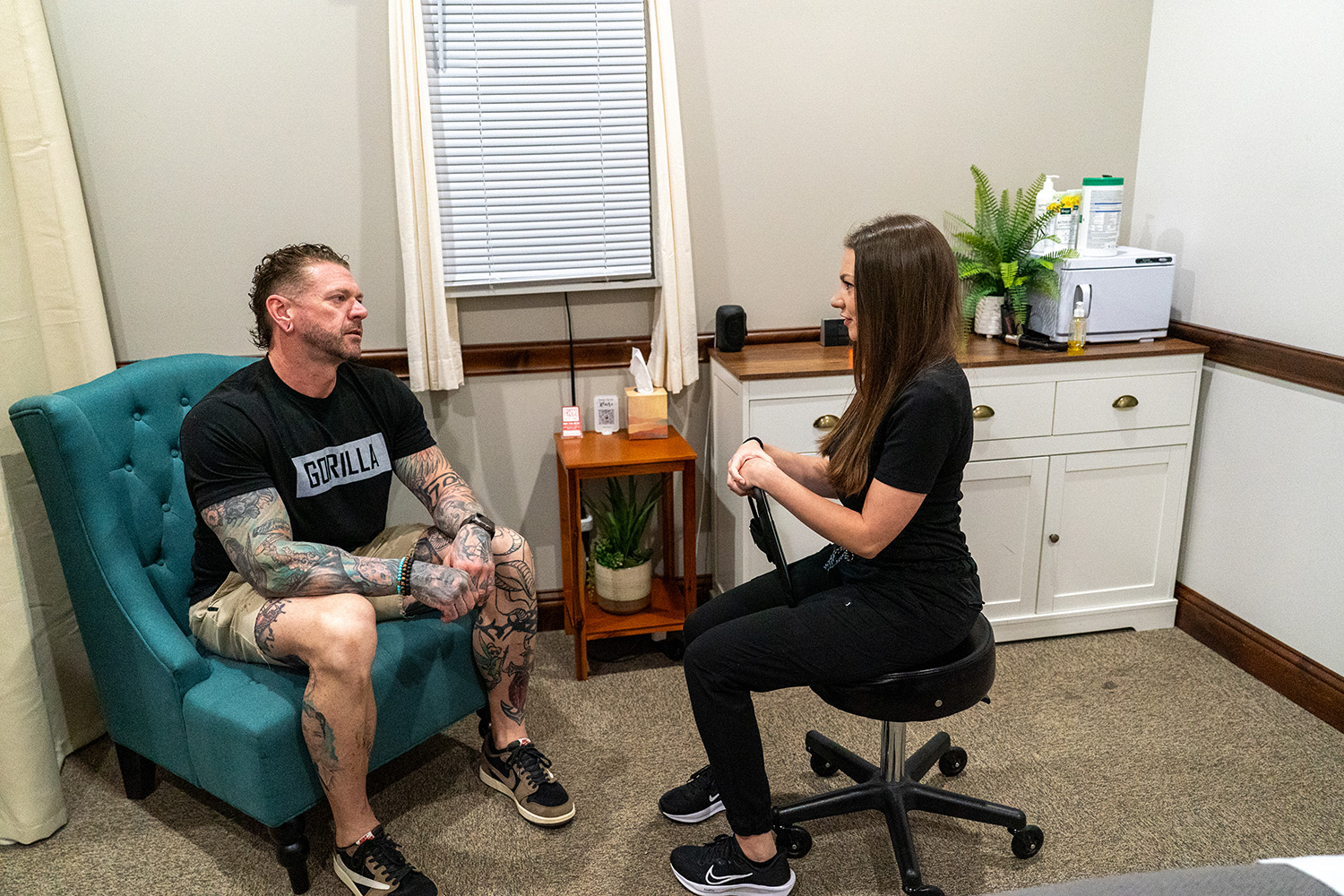
It does mean that when someone comes to Frisco Massage Therapy Recovery & Mobility with plantar heel discomfort, we are interested in more than the exact location that hurts.
We may also look at areas such as:
- Calf musculature
- Ankle mobility
- Achilles region
- Muscles of the lower leg
- Soft tissues of the foot
- Movement patterns related to the client’s activities
The goal is to understand the broader pattern rather than treating the heel as an isolated structure.
Where Can Massage Fit?
Massage therapy is not a cure for plantar fasciitis, and persistent heel pain should not be managed by massage alone.
But skilled manual therapy may be useful as one part of a broader conservative approach.
The current clinical practice guideline for plantar heel pain recommends manual therapy directed toward relevant joints and soft tissues of the lower extremity, along with plantar fascia and calf stretching, to address pain and functional limitations.
Depending on the individual, massage may focus on areas of muscular tension or soft-tissue restriction through the calf, lower leg and foot.
At Frisco Massage Therapy Recovery & Mobility, that means the session is not built around attacking the painful spot with increasingly aggressive pressure.
We look at what is moving well, what is not, what activities are loading the area and which surrounding tissues may reasonably benefit from hands-on work.
It’s not simply about where it hurts. It’s about understanding what that area has been asked to do.
Massage Is Only One Piece
Plantar fasciitis often responds best to a combination of strategies rather than one treatment.
Depending on the individual, conservative care may include:
- Plantar fascia and calf stretching
- Gradual modification of aggravating activity
- Appropriate strengthening
- Supportive footwear
- Taping or orthotics when appropriate
- Physical therapy
- Manual therapy
Mayo Clinic and the American Academy of Orthopaedic Surgeons both describe activity modification, stretching and attention to footwear or biomechanics among common conservative approaches.
The right combination depends on the person, their activities and what is actually contributing to the problem.
When Heel Pain Needs More Than Massage
Not every painful heel is plantar fasciitis.
Heel pain can also occur with conditions involving the Achilles tendon, nerves, bones and other structures. If you have significant swelling, numbness or tingling, difficulty bearing weight, pain following an injury, or pain that continues or worsens despite conservative care, medical evaluation is appropriate.
Massage therapists do not diagnose plantar fasciitis.
What we can do is listen to what you are experiencing, work within our scope, address relevant muscular and soft-tissue findings, and recommend another healthcare provider when the situation calls for one.
The Bottom Line
When your heel hurts, it makes sense to pay attention to the heel.
Just don’t forget the rest of the system connected to it.
Your foot, ankle and lower leg work together every time you stand, walk or run. Addressing plantar heel pain may mean looking beyond the location of the discomfort and considering the mobility, workload and muscular tension surrounding it.
That broader perspective is part of how we approach massage at Frisco Massage Therapy Recovery & Mobility.
Experiencing Persistent Foot or Heel Discomfort?
Our Injury Recovery sessions are designed for focused work when pain, tension or restricted movement is getting in the way of what you want to do.
This article is for general educational purposes and is not intended to diagnose or treat a medical condition. New, persistent or worsening heel pain should be evaluated by an appropriate healthcare professional.